
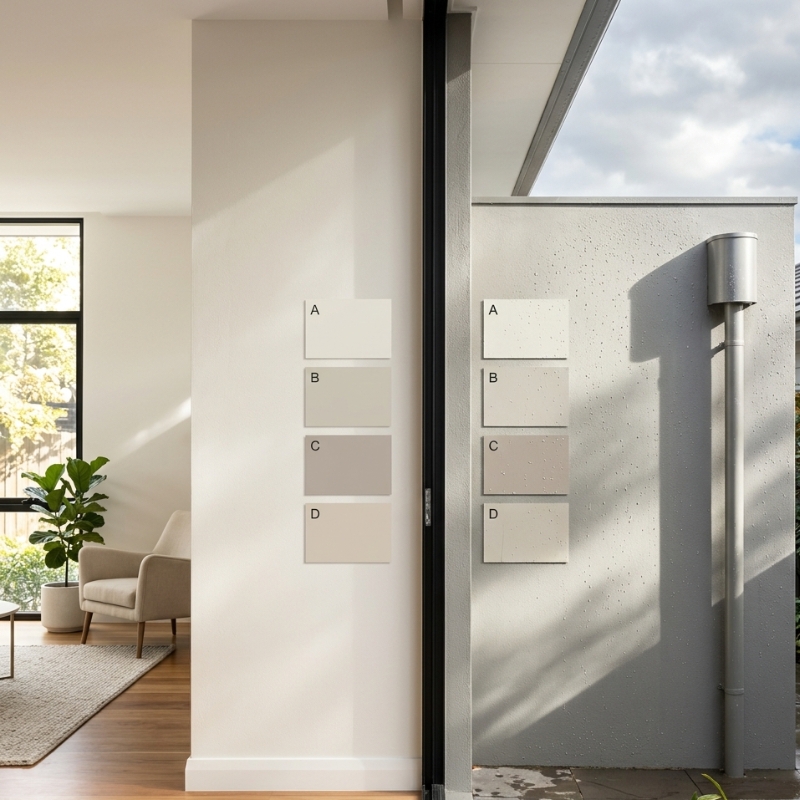
Morning sun pouring through a north-facing lounge can pull warm undertones from a beige that looked cool in the shop. Meanwhile, the same shade may fade to a dusty pastel on an exterior wall hammered by ultraviolet (UV) light and salty breezes. For Sydney homeowners, the environment is everything when it comes to choosing paint colours. This guide unpacks the three big influencers—light, weather and surface type—so you can make informed choices and avoid surprises. And if you ever feel stuck, tapping into the expertise of professional house painters in Sydney can help convert vision into a finish that lasts.
1. Light: Why the Same Colour Swatch Looks Different Inside and Out
Indoors, lighting is a carefully curated mix of natural daylight, LED downlights, lamps and—in older homes—fluorescent tubes. Outside, the only “bulb” is the sun, and it behaves very differently throughout the day.
How Light Temperature Alters Perception
• Morning sunlight (cooler, slightly bluish) can make whites look crisp and greys lean blue.
• Afternoon light (warmer, more yellow) tends to mute blues and greens while enriching reds and browns.
• Indoor LEDs range from cool white (≈4000 K) in kitchens to warm white (≈2700 K) in bedrooms—each shifting colour undertones.
Practical Tip
Paint two 1 m² test patches—one indoors and one on a shaded exterior wall—and observe them at 8 am, midday and 4 pm. You’ll be surprised by the shifts.
Sydney Room Orientation Cheat-Sheet
• North-facing rooms receive consistent light and can handle cooler, deeper hues.
• East-facing rooms are flooded with cool morning light—great for warm neutrals.
• South-facing rooms often appear dim; lighter, warmer colours stop them from feeling cold.
• West-facing rooms catch hot afternoon sun that amplifies reds and yellows—soft greens can balance glare.
Sample Size Matters
An A4 paint swatch held under store lighting rarely predicts reality. Roll a sample pot onto a large sheet of cardboard, move it around the room, then place it outdoors next to cladding or brickwork. This single step sidesteps most colour-choice regrets.
2. Weather Realities: UV, Humidity and Coastal Breezes
Sydney sits on the borderline between humid subtropical and temperate climates. Our summers can spike over 30 °C with humidity above 65 %, while winter days still see high UV indexes. All of this punishes paint—especially outside.
UV Intensity: The Fade Factor
Australia has some of the world’s highest UV readings. Dark blues, deep reds and charcoal greys absorb more light energy and therefore break down faster. High-quality exterior paints pack extra UV blockers and higher pigment loads to slow chalking and colour fade.
Humidity and Drying Times
Interior paint needs time for water or solvents to evaporate. When humidity hovers above 60 %, touch-dry times can double, and trapped moisture may cloud a satin finish. On exteriors, damp substrates risk blistering. Plan paint days around the Bureau of Meteorology’s hourly forecasts rather than the calendar.
Salt Air Around Coastal Suburbs
From Bondi to Cronulla, sea spray carries microscopic salt crystals that work their way into porous surfaces, leading to flaking. Specialised exterior formulations include anti-corrosive additives and flexible binders to handle this coastal assault.
Below is a quick side-by-side of interior and exterior paint characteristics you’ll often see on product labels.
Interior vs Exterior Paint at a Glance
| Attribute | Interior Paint | Exterior Paint |
| Pigment Load | Moderate (balanced for washability) | Higher (boosts opacity & fade resistance) |
| Binders & Additives | Emphasis on stain resistance & low odour | UV blockers, anti-mould, anti-chalk agents |
| Typical Sheen Options | Flat, low-sheen, matte to high-gloss | Low-sheen to semi-gloss (gloss helps water run-off) |
| Designed Substrates | Gyprock, MDF, timber trims | Brick, render, weatherboard, fibre-cement |
| Key Risks if Misused | Scuffing, easy staining, moisture damage in wet areas | Fading, peeling, salt-driven corrosion |
Not all brands follow these exact specs, but the table helps decode why a tin labelled “interior/exterior” is usually a compromise rather than a specialist.
3. Surface Matters: Gyprock, Brick, Weatherboard & Beyond
Colour isn’t the only variable—what you’re painting over shapes the result.
Porosity and Texture
• Gyprock/Plasterboard indoors is smooth yet porous. It needs sealing to stop expensive topcoats soaking in and looking patchy.
• Brick and Masonry exteriors expand, contract and absorb moisture, so flexible, breathable coatings reduce cracking.
• Timber Weatherboards have grain that shows through thin paint films; thicker “self-priming” exterior paints or separate oil-based primers help lock tannins in.
Mistakes to Avoid
- Using interior paint outdoors because “it’s the same colour code”. The binder chemistry isn’t built for UV or rain.
- Skipping primer on alkaline render—it can cause alkali burn, turning whites yellow.
- Painting older lead-based layers without sealing—lead can ghost through and remain a hazard.
Understanding the right render finish for your home helps in making informed colour choices.
4. Finish and Sheen: More Than Just Gloss or Matte
Reflectivity influences not just appearance but also cleanability and moisture resilience.
• Flat/Matte hides surface imperfections indoors but chalks quickly outside.
• Low-Sheen/Eggshell works for living areas; it handles gentle cleaning.
• Semi-Gloss and Gloss bounce light, highlighting trim details; exterior gloss helps rain bead and run off, reducing mildew.
Keep context in mind: a full-gloss navy feature wall indoors can glare under downlights, whereas the same sheen outdoors might be perfect for heritage timber fretwork.
5. Common Colour-Choice Mistakes to Avoid
Even seasoned DIYers get caught out. Here are the traps we see most often around Sydney suburbs:
- Relying on Tiny Swatches
Under store fluorescents, every colour looks cooler. Always test at home under real light. - Ignoring Undertones in Bright Sunlight
A grey with a hint of green can look minty in the eastern suburbs’ morning glare. Check undertones by placing swatches against a pure white sheet. - Forgetting Exterior Accents
Downpipes, roof tiles and even terracotta pots become part of the palette. Take a photo of your façade and colour-pick items already on show.
For interior ambience insights beyond light considerations, see how wall colours influence indoor ambience. It dives into mood psychology, helping you balance the technical with the emotional side of colour.
6. Quick Checklist Before You Buy Any Paint in Sydney
• Measure light levels in each room at different times.
• Note wall orientation (north, south, east, west).
• Check the upcoming 48-hour weather forecast—humidity below 60 % is ideal.
• Inspect substrates for cracks, mould or chalking.
• Buy sample pots of shortlisted colours and paint at least a 1 m² area.
• View each sample morning, noon and dusk; include artificial lighting at night.
• Confirm paint is labelled for interior or exterior as needed.
• Double-check sheen level matches durability and aesthetic goals.
Spend a couple of hours on this checklist, and you’ll save days of repainting later.
7. When Professional Input Helps
Not every job warrants a contractor, but some red flags suggest calling in backup:
• Multiple substrates in poor condition (e.g. render, timber trim, metal balustrades).
• Heritage colour-matching requirements under local council guidelines.
• Persistent flaking or chalking despite prep—may signal moisture ingress.
• Hard-to-reach façades that involve safely working at height.
Licensed tradespeople stay across NSW Fair Trading guidelines on painting and can recommend coatings that comply with Australian Standards, especially for lead-based paint management and scaffold safety. A quick consultation often prevents expensive rework.
FAQs
1. Will my chosen exterior colour look lighter once applied?
Most colours appear a shade or two lighter outside because bright UV rays wash out pigmentation. Test-patching on a sun-exposed section of wall lets you adjust before buying full tins.
2. Do I need specialty paint for homes near the beach?
Salt air accelerates corrosion and paint breakdown. Look for products marketed as “coastal” or “marine-grade” with anti-corrosive additives and higher flexibility. They resist peeling better than standard exterior paints.
3. Can I use the exact same colour code for both interior and exterior walls?
Yes—colour codes can be mixed into both interior and exterior bases—but the formulations differ. Ensure you purchase the right base paint (interior or exterior) even if the tinted colour looks identical in the can.
4. How often should exterior paint be refreshed in Sydney’s climate?
Timeframes vary with colour depth, exposure and product quality, but a well-prepped, premium exterior system can remain sound for 8–12 years. Homes facing harsh afternoon sun or coastal spray may need touch-ups sooner. Monitoring early signs of chalking or flaky edges is key.
Conclusion
Choosing paint colours in Sydney isn’t just about picking a swatch you love; it’s a balancing act between light behaviour, weather extremes and the surface under your brush. By testing colours in context, matching paint technology to the environment and giving surfaces the prep they deserve, you’ll enjoy results that look right and last longer. If the variables still feel overwhelming, a brief consult with experienced professionals can steer you toward coatings tailored to your home’s unique conditions—saving both time and future repaint headaches.