
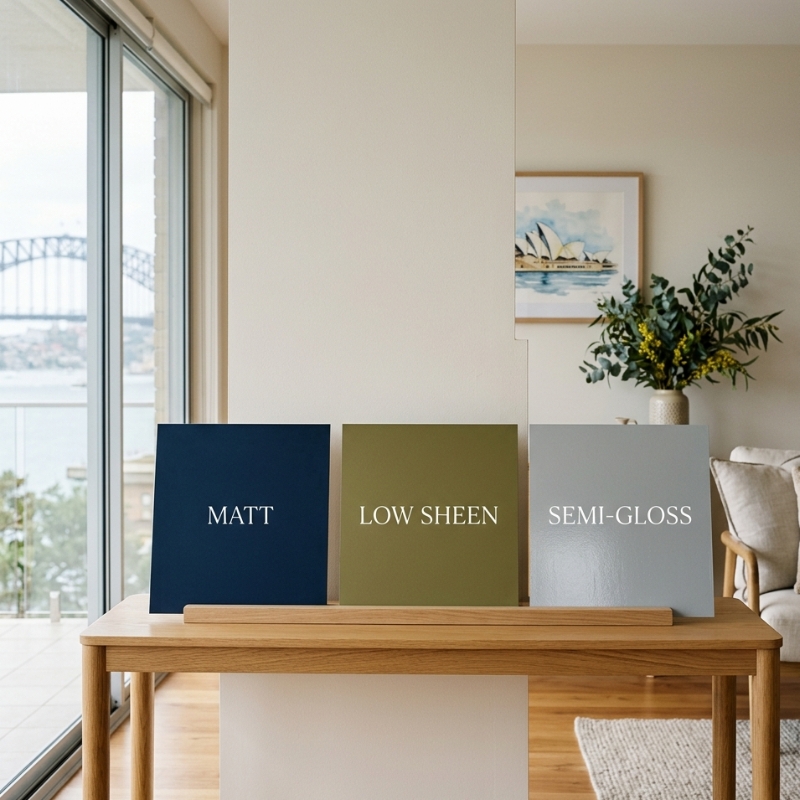
A new colour scheme can transform a space, but the wrong paint finish can turn fresh walls into fingerprint magnets or glare factories. Gloss level influences everything from light reflection to clean-up effort, so it’s just as important as hue. Before you start sampling swatches—or calling in professional painting services in Sydney—let’s unpack the three most common interior finishes and where each one truly shines.
1. Why Paint Finish Matters More Than You Think
Paint finish (or sheen level) affects:
• Durability and scrub resistance
• How much natural or artificial light bounces around the room
• Whether surface imperfections are hidden or highlighted
• Perceived colour depth—glossier films can appear slightly darker
Choose poorly, and high-traffic areas scuff quickly, or glossy streaks emphasise every patched nail hole. Get it right, and the coating protects surfaces, complements lighting and makes upkeep easy. Whether surface imperfections are hidden or highlighted, and even how the colour itself is perceived – something we unpack in more detail in our piece on how wall colour influences ambience.
2. Meet the Core Interior Finishes
Matt (also called Flat)
• Very low reflectance, giving walls a smooth, soft look.
• Excellent at hiding minor plaster joins or patch repairs.
• Traditionally less washable, but modern premium matt paints now tolerate gentle cleaning.
Low Sheen
• Subtle glow—think eggshell on older US charts or around 8–12 per cent gloss level.
• Balances concealment with durability.
• Popular default for most living areas and rental properties because it can handle light scrubbing.
Semi-Gloss
• Noticeably reflective (roughly 30–50 per cent gloss).
• Tougher resin blend resists moisture, grease and bumps.
• Highlights texture—good on crisp architraves but unforgiving on patchy walls.
3. Side-by-Side Comparison
The table below summarises how each finish stacks up on practical factors.
| Attribute | Matt | Low Sheen | Semi-Gloss |
| Reflectance | Very low | Mild | High |
| Surface-flaw hiding | Excellent | Good | Poor |
| Washability | Basic (improving with premium ranges) | Moderate | High |
| Moisture resistance | Low | Moderate | High |
| Touch-up blend-in | Easy | Moderate | Hard—flashing likely |
| Typical uses | Bedrooms, ceilings, media rooms | Living rooms, hallways, kid’s rooms | Kitchens, bathrooms, trim, doors |
A glance at the grid often clarifies which finish belongs where, but there are still room-specific quirks to consider.
4. Room-by-Room Finish Guide
Living & Dining Areas
Low sheen is the crowd-pleaser: it bounces enough light for an inviting feel without showing every scuff from chair backs.
Bedrooms
Matt offers a calming, non-glare environment—ideal if you use bedside reading lamps or have textured feature walls.
Kitchens & Bathrooms
Steam, splashes and cleaning sprays call for semi-gloss on walls near sinks, with a full gloss or specialised enamel on trims. If you’re worried about too much shine, combine finishes: low sheen for general wall areas and semi-gloss only where water hits.
Hallways & High-Traffic Zones
Low sheen again wins because it copes with busy footpaths and trolley knocks, yet still camouflages minor dents.
Feature Walls & Dark Colours
Deep charcoal or navy shades look richer in matt, but if kids’ fingerprints are inevitable, opt for a high-quality, low sheen formulated for washability.
5. Beyond the Room: Other Factors That Tip the Balance
- Natural Light Direction
• North-facing Sydney rooms already receive intense sun—semi-gloss may cause glare.
• Southerly rooms can benefit from the mild lift of low sheen. - Surface Condition
Old render or patched plasterboard? Matt disguises flaws. Perfect new gyprock? Semi-gloss can highlight its crispness. - Cleaning Expectations
Hospitality venues often need nightly wipe-downs, favouring semi-gloss despite the shine. - Colour Depth
Bold hues appear slightly deeper in glossier finishes—sample boards save surprises.
6. Common Finish-Selection Mistakes to Avoid
• Choosing only on the colour card shine—store lights differ from home lighting.
• Using semi-gloss on imperfect ceilings—undulation shadows become obvious.
• Assuming all matt paints are fragile—premium interior matt lines now offer scrubbable formulas, but budget flats still mark easily.
• Mixing brands without checking gloss levels—one manufacturer’s “low sheen” may look different under downlights than another’s.
7. Quick Checklist Before You Buy
| Question | Yes | No |
| Will the wall face heavy traffic or moisture? | ||
| Are there visible patches or texture to hide? | ||
| Do you need to wash the surface regularly? | ||
| Is the room naturally bright and reflective already? | ||
| Are you planning bold or very dark colours? |
Tick mostly “Yes” on the first three? Semi-gloss is safer. More “Yes” on the last two? Lean matt or low sheen.
8. Thinking About Indoor Air Quality
Low-VOC coatings reduce odours and airborne chemicals—especially worthwhile in nurseries, bedrooms and offices. The Australian Government’s YourHome paints guide explains how VOC ratings affect interior air and sustainability goals. Pair the right finish with a low-VOC formulation to keep rooms both beautiful and healthier.
9. Layering Finishes for Subtle Design Effects
Professional painters often combine finishes in one space:
• Semi-gloss trims frame matt walls, adding depth.
• Low sheen main walls with a matt feature panel keep focal points soft.
• Semi-gloss on high-splash zones, such as kitchen backs, but low sheen in adjoining dining areas maintains flow without compromising durability.
Clever contrast elevates a renovation beyond “new paint smell” to considered interior design.
FAQ
1. Can I put semi-gloss directly over a matt wall without primer?
You can if the existing paint is sound, but a quick sand and a suitable primer ensure even sheen and adhesion. Skipping prep often leads to patchy flashing where roller lap lines show.
2. Does higher gloss always mean better durability?
Generally, yes—harder resins resist moisture and scrubbing. However, premium low-sheen products now contain additives that close the gap for everyday wear.
3. What finish should I use on the ceiling?
Ceilings are usually matt to minimise reflection and hide minor gyprock joins. In bathrooms, a speciality moisture-resistant matt or very low sheen ceiling paint helps prevent mould.
4. Will fingerprints show on low-sheen walls?
Low sheen camouflages marks better than semi-gloss but not as well as matt. Choosing a washable, low-sheen formula balances cleanability with disguise.
5. How many samples should I test?
At least two finishes of each colour: one in matt or low sheen (wall contenders) and one semi-gloss (for trims). Paint A4 sample boards and move them around the room at different times of day.
Final Thoughts
The perfect paint finish is a balancing act between beauty, durability and practicality. By matching sheen level to room function, light conditions and surface quality, you’ll enjoy walls that look fresh longer and hold up to everyday life. When in doubt, sample first—or talk through options with your painter to pair the ideal product with your design goals. Either way, finish choice is one small detail that makes a huge difference to the final result.